
A Research Cruise in the Northern Gulf of Mexico
- Rosalie K. Cruikshank
- Jan 25, 2024
- 1 min read

Updated: Feb 10
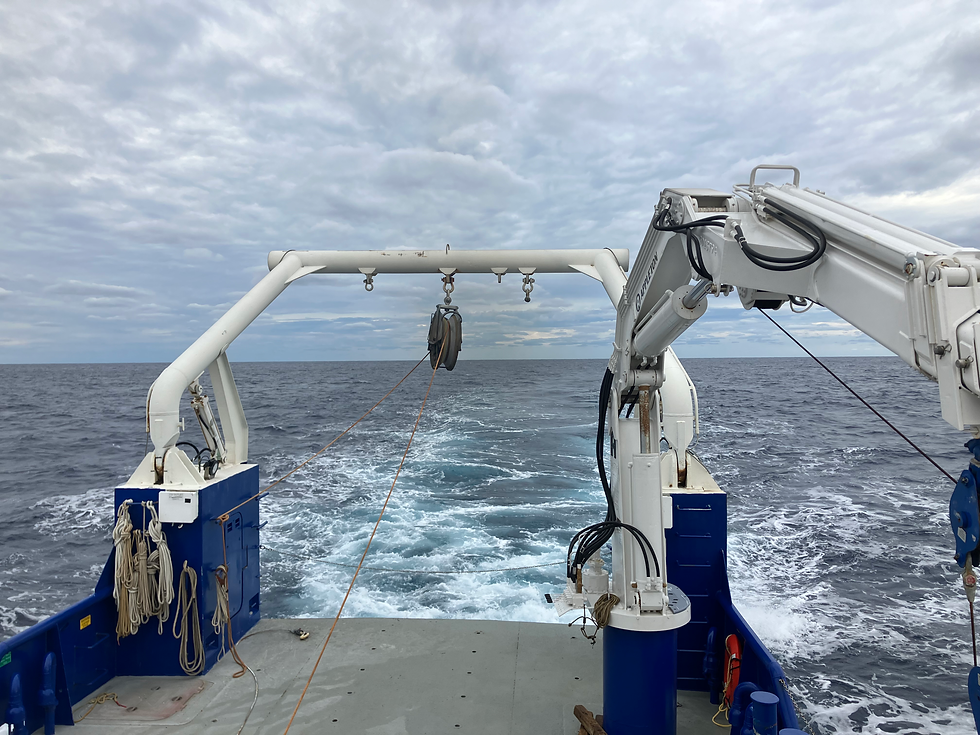
In late November of 2023 I had the amazing opportunity to attend a research cruise on the R/V Pelican operated by the Louisiana Universities Marine Consortium (LUMCON) to collect and redeploy a sediment trap in the northern Gulf of Mexico.
This sediment trap sits about halfway down the water column and collects sediment samples in cups that rotate every 7 to 14 days. It plays a crucial role in various long-term time-series studies conducted by scientists at the U.S. Geological Survey (USGS) and NOAA: National Oceanic & Atmospheric Administration. These studies include investigating sediment flux, analyzing planktonic foraminiferal densities, and utilizing eDNA to explore the organisms present in the water column. Planktonic foraminiferal densities refer to the concentration of microscopic marine organisms in the water, which can provide insights into environmental conditions, and eDNA, or environmental DNA, is a method used to identify organisms in a habitat by analyzing genetic material found in the water.
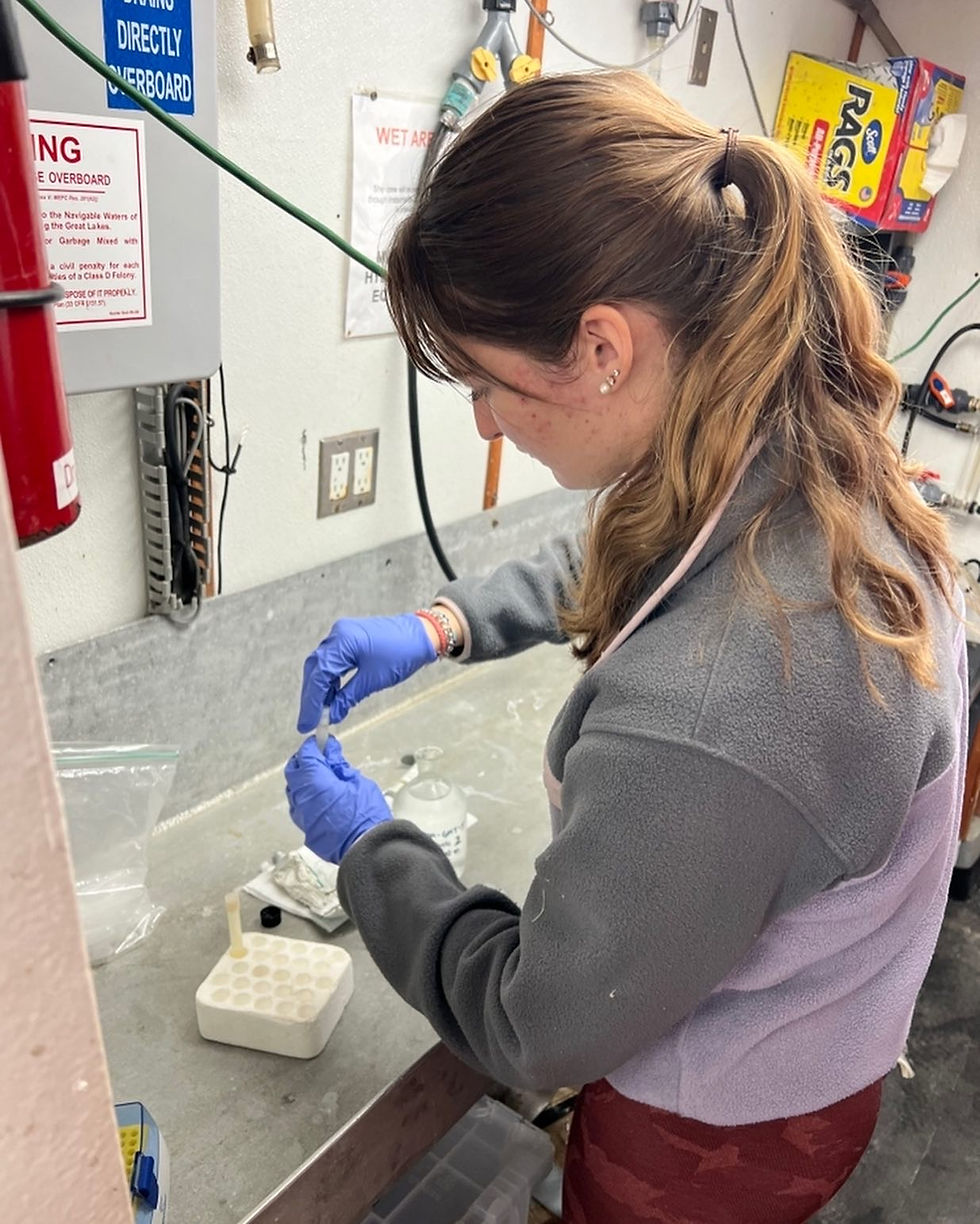
I have been heavily involved in the processing of sediment trap samples for particulate flux for the past few months at USGS, so it was amazing to be a part of this step in the process. I am deeply grateful for the invaluable experience and knowledge I have gained through this role.




Comments